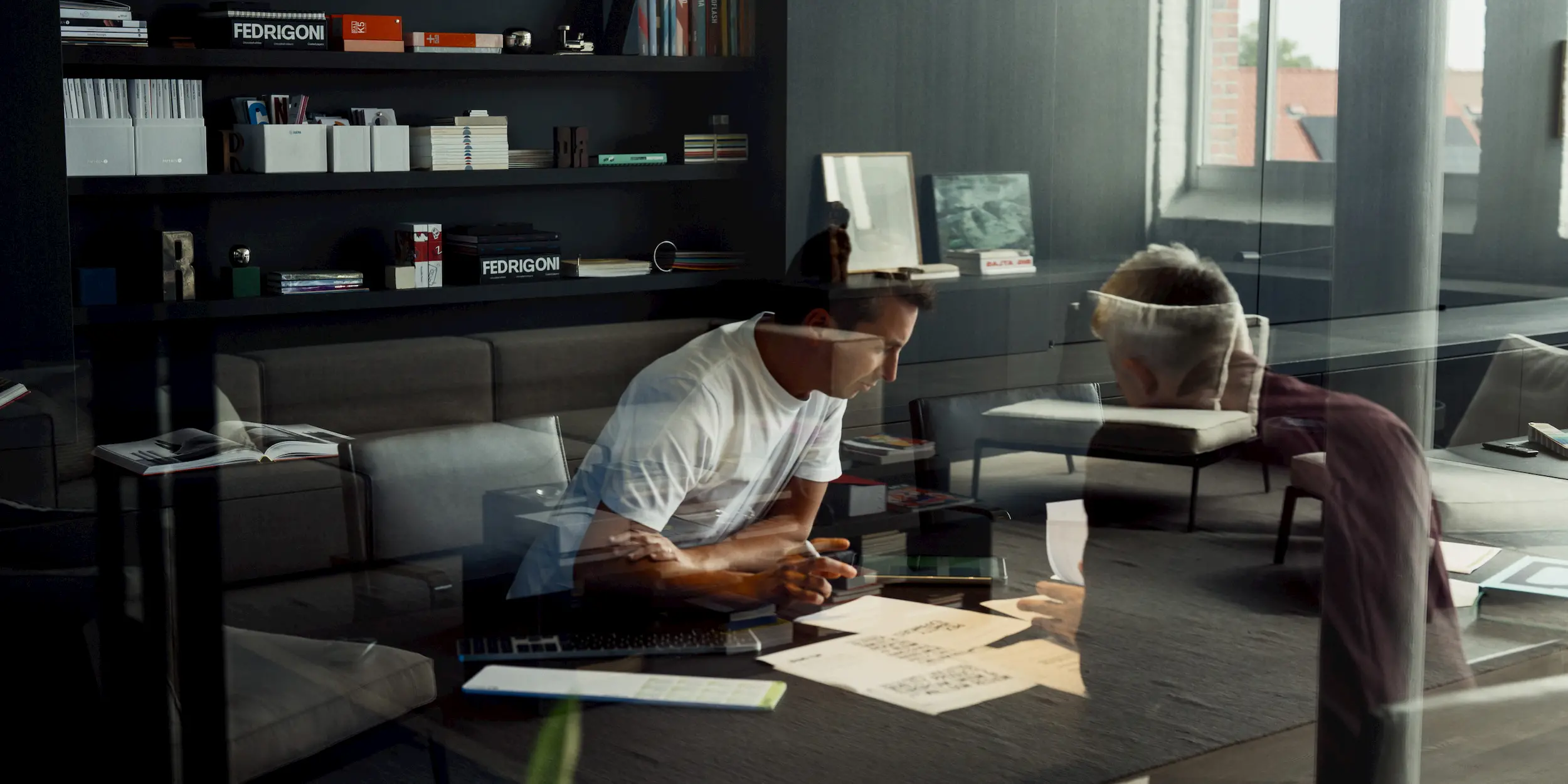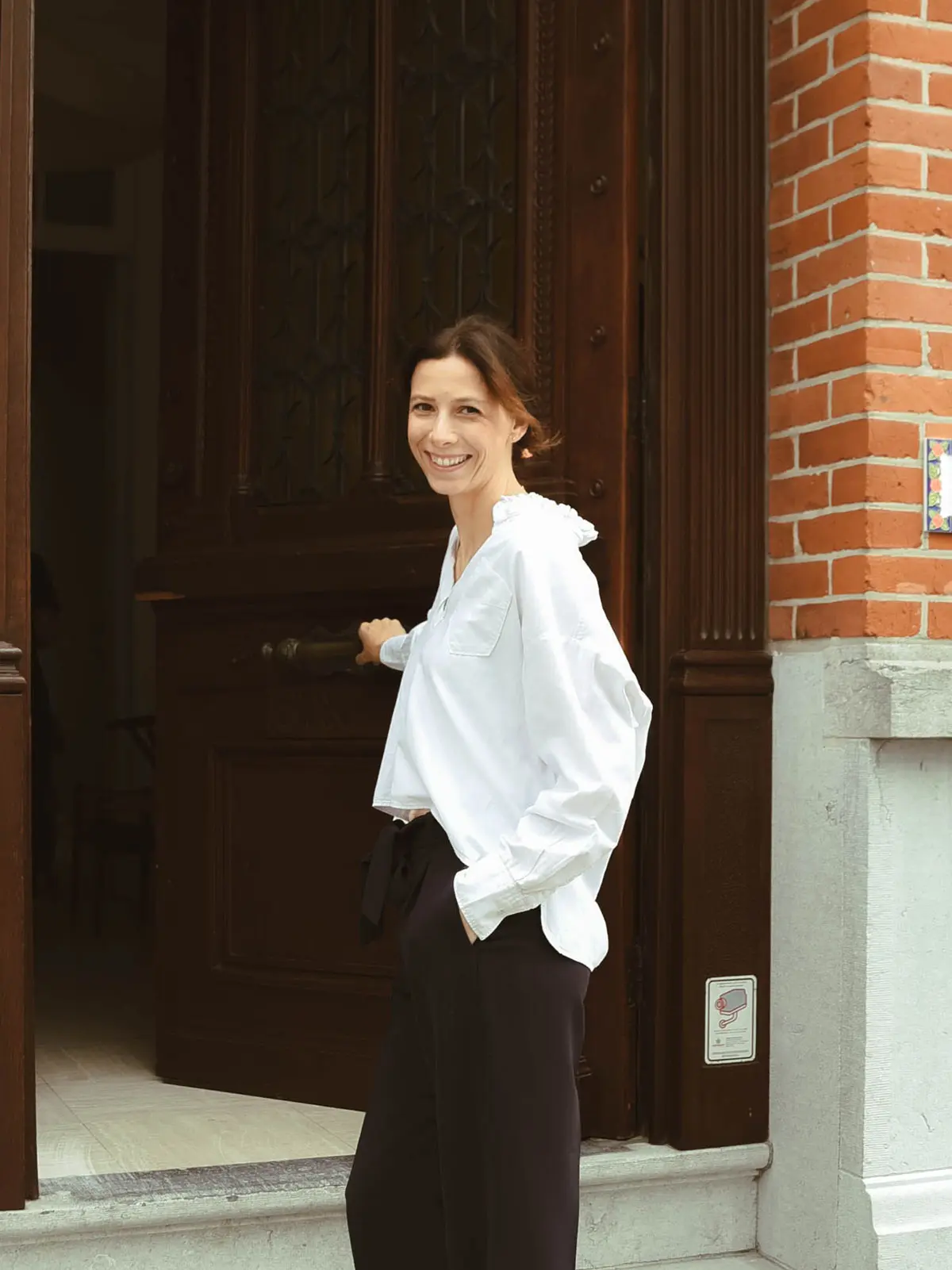
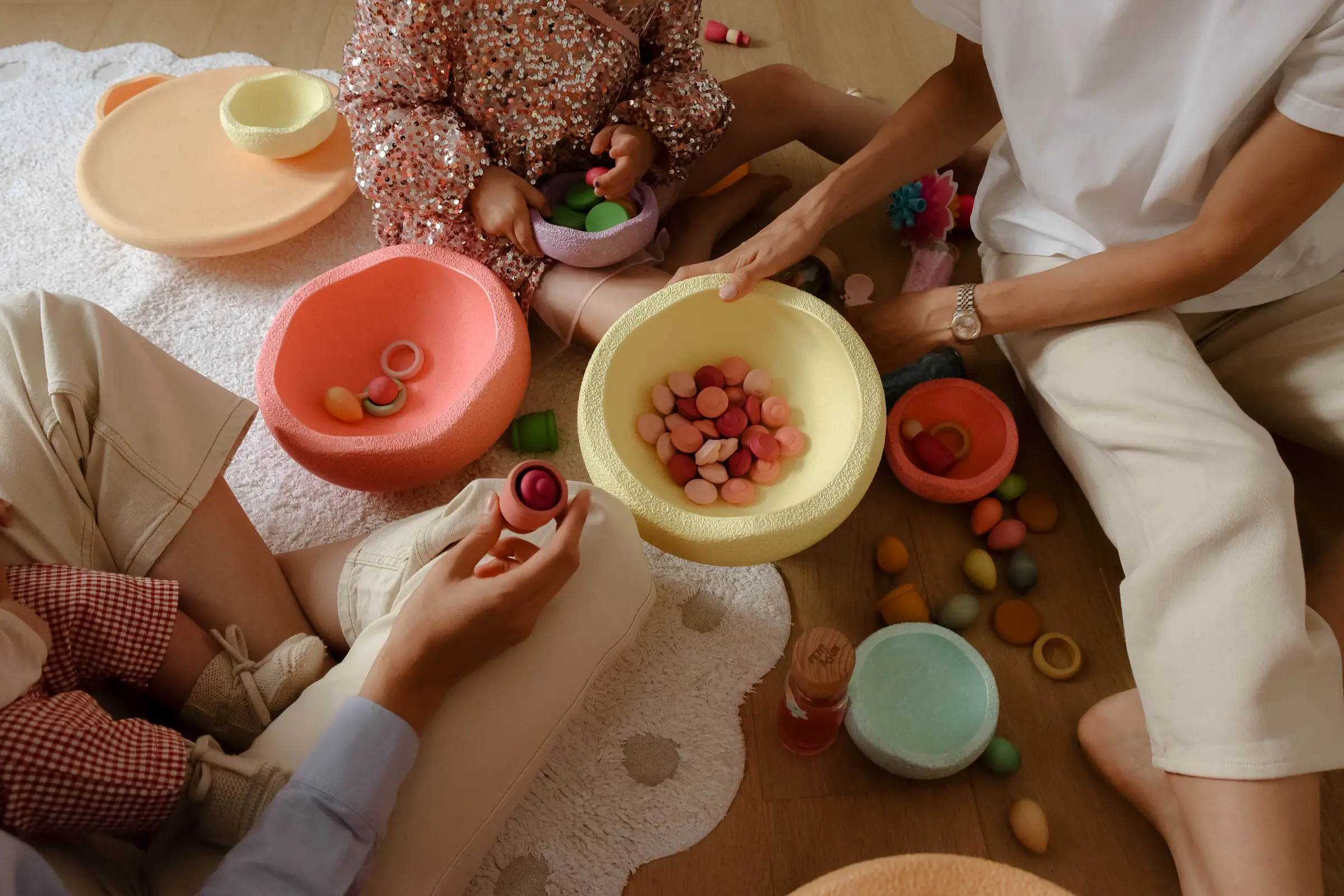
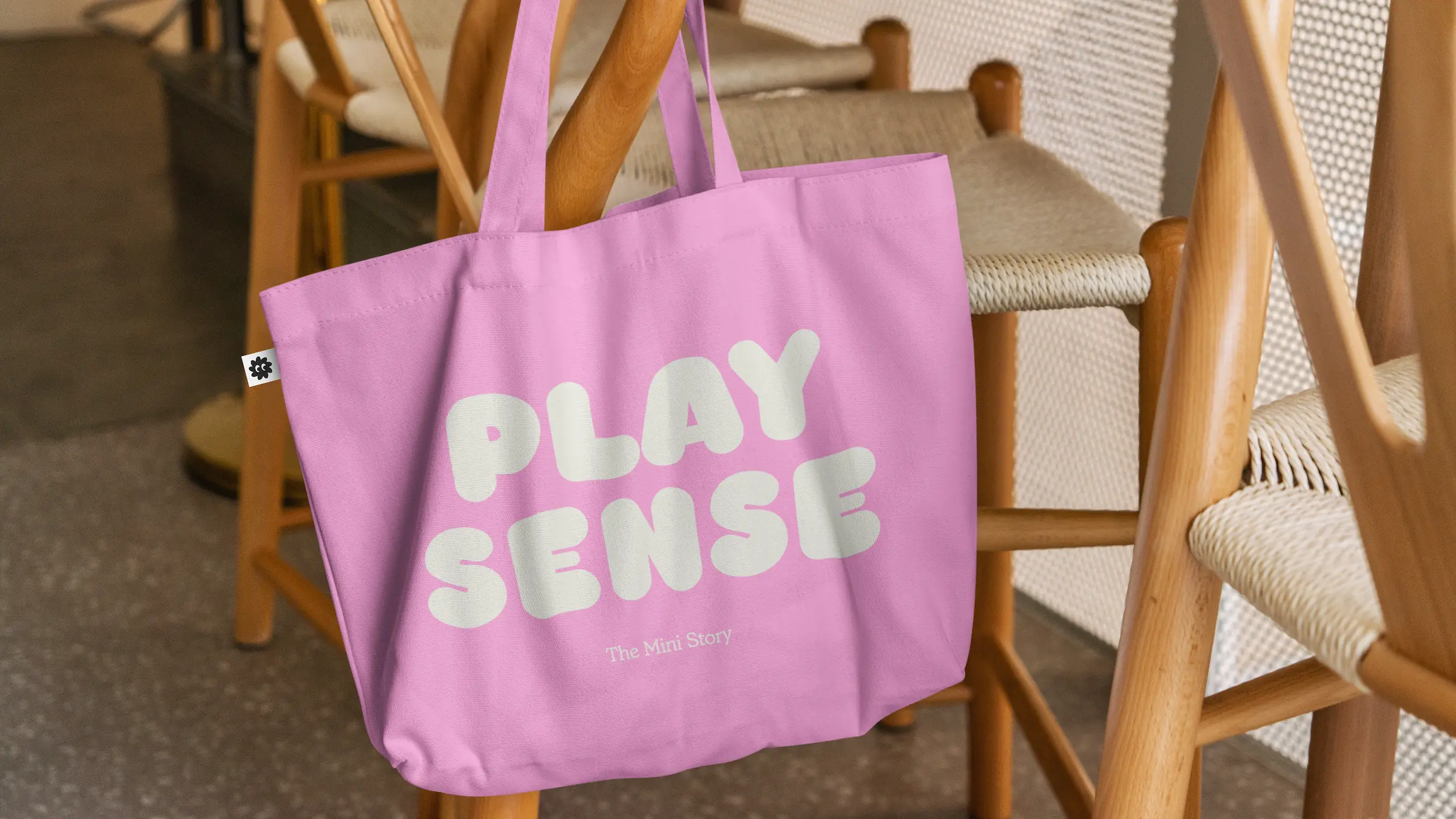
Sensory, open-ended toys with endless possibilities: that’s what The Mini Story is all about. When Emilie Carrette took over an existing online shop, she teamed up with Hunt to turn it into a brand with a personality all its own. A strategic process gave rise to a world that children and parents alike adore – complete with a brand-new logo, colour palette and typography, illustrations, a curious little fluffball of a mascot and much more.
HUNT: Emilie, you trained as a preschool teacher, you’re a mum of four and you run your own business. The Mini Story brings a lot of that together.
Emilie: Absolutely. On my dad’s side, pretty much everyone is self-employed; on my mum’s side, they’re all in education. I got a bit of both. As a preschool teacher, I loved observing children and playing alongside them: you gradually find out what they’re interested in and build on it. Sometimes you can give them a little extra challenge, sometimes they need you to dial things back. Every child develops at their own pace.
I found that same philosophy in The Mini Story. The brand already existed – I was a customer myself. Lynn and Florian started the shop in 2019 because they were looking for toys that would support their own children’s development. Not noisy toys full of flashing lights and bells and whistles that are boring after twenty minutes, but toys that keep children exploring. That vision fitted perfectly with how my partner Bavo and I want to raise our brood.
We took over the business on 1 June 2025. It all happened very fast. I remember thinking: ‘I’d love to run a brand like that.’ And suddenly it was ours. ‘Shit, now what?’
HUNT: You believed in the story, but it didn’t quite feel like yours yet.
Emilie: Exactly. I felt Lynn and Florian had done a great job, and I wanted to respect what they’d built. At the same time, I wanted to put my own stamp on it. I’m pretty handy with design software – I use InDesign and Illustrator – and I have lots of ideas. Sometimes too many to choose from. Besides, I didn’t want to spend all day designing at my computer. I’m far too active for that.
At first, I was looking for an agency to help me with things like our Instagram visuals. We spoke to two agencies, and both came back with really good proposals. But you’d gone the extra mile.
At first, I was looking for an agency to help me with things like our Instagram visuals. We spoke to two agencies, and both came back with really good proposals. But you’d gone the extra mile.
HUNT: We proposed a strategic process, built on market research.
Emilie: That’s right. Your research showed that in my niche – sensory and open-ended toys – there wasn’t really a single brand in Belgium with a strong identity. There were some online shops, and now and then one where the owner’s personality shone through, but most of them felt fairly anonymous.
HUNT: We saw an opportunity for The Mini Story to establish itself as a recognisable brand with a clear vision. What gave you the confidence to sign up for that broader proposal?
Emilie: The moment I saw the designs, I knew they were right. I already knew David, and Thomas and I clicked creatively straight away. I recognised a lot of myself in his approach to design. My head was still full of half-formed ideas, but Thomas understood where I wanted to go. That gave me the confidence to take the plunge with Hunt – a full rebrand simply made sense.
“My head was still full of half-formed ideas, but Thomas understood where I wanted to go.”
Emilie Carrette, owner of The Mini Story
HUNT: You told us about your love of Disney and Mary Blair, and your ties to French culture. What is it about them that speaks to you?
Emilie: I’m a huge Disney fan, and I adore the childlike, colourful quality of Mary Blair’s work. French culture also runs in my family, and I love taking the kids to Paris for the art and the museums. Playfulness combined with French elegance: that was the feeling I was after. It mattered to me to give you a glimpse into my world – and I think that’s also what gave you the confidence to go all in on colour, for example.
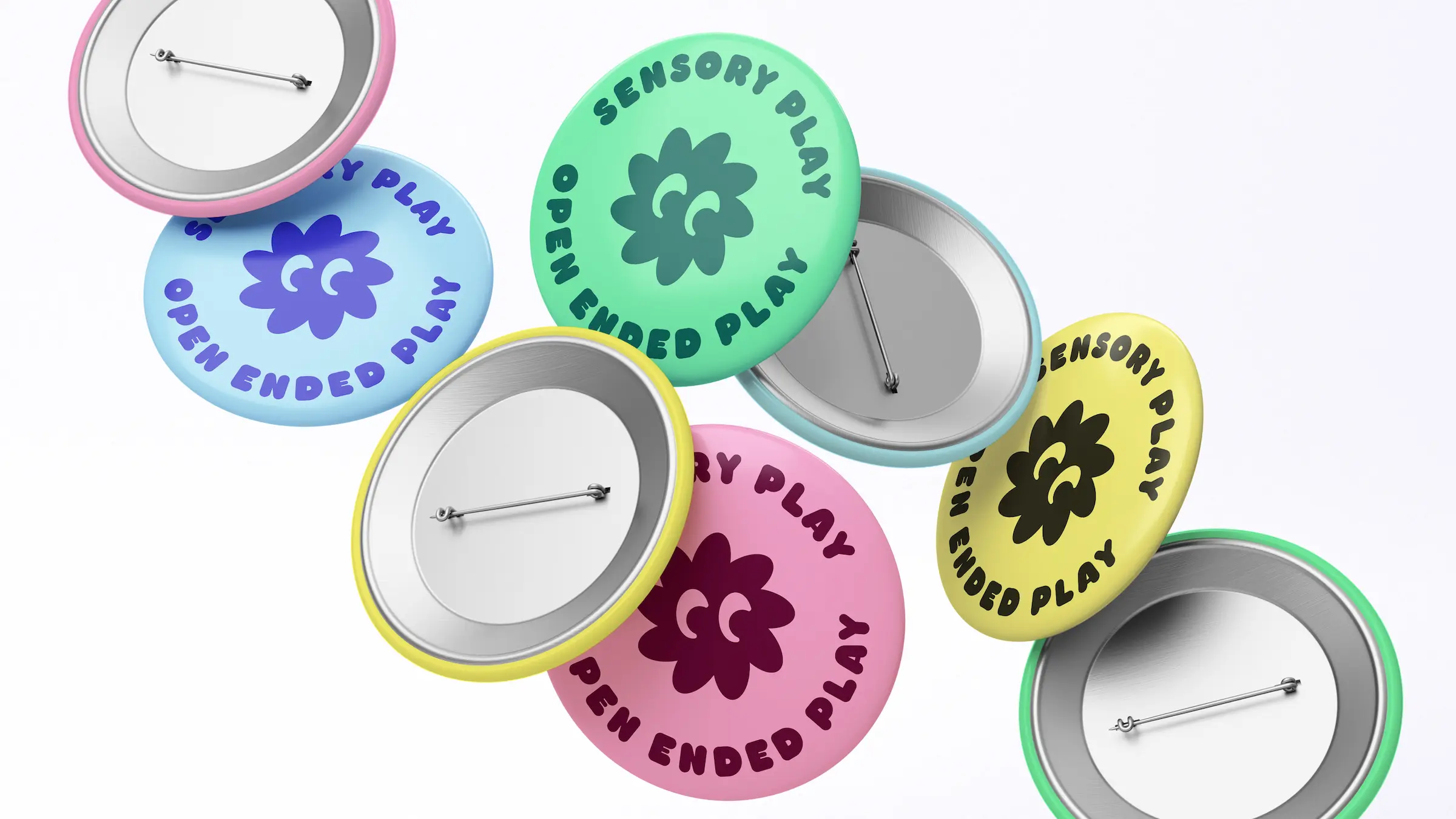
HUNT: Alongside the typographic logo, we also created a ‘mascot’: a curious little fluffball that captures children’s urge to explore. You named it straight away.
Emilie: I called it ‘Aster’, after my grandmother Astria – a strong, resilient woman. By the time we next met, that little character was already far more to me than a drawing.
Aster comes in four colours, and I linked each one to the personality of one of my children. It all happened very organically. You created a brand, and I started seeing more and more of my own story in it. It felt – and still feels – very personal.
Aster comes in four colours, and I linked each one to the personality of one of my children. It all happened very organically. You created a brand, and I started seeing more and more of my own story in it. It felt – and still feels – very personal.
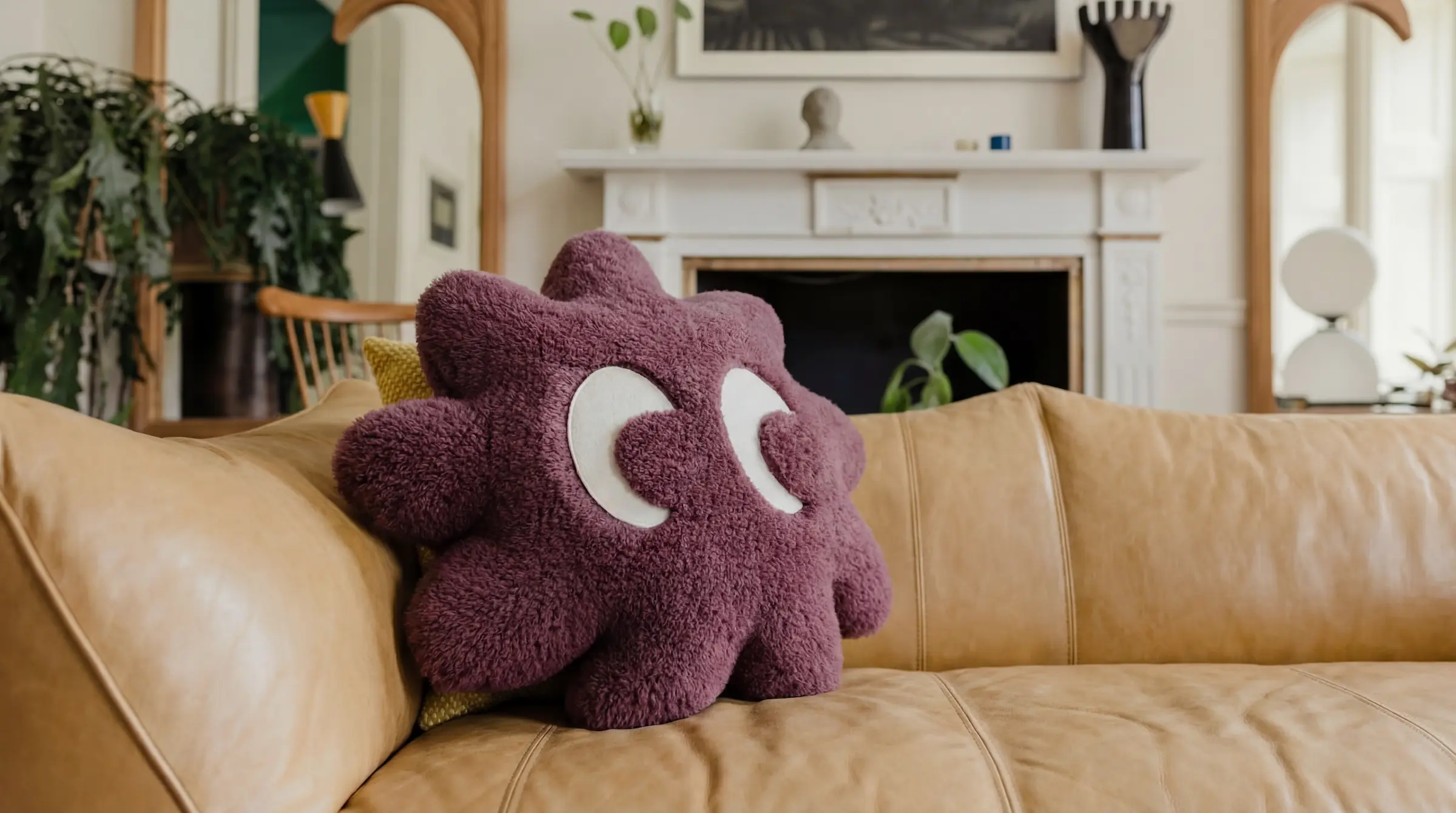
HUNT: Aster made the brand tangible.
Emilie: Exactly. And beyond my own personal bond with Aster, the idea is of course that customers – and especially children – form a bond with the character too, one that goes deeper than simply recognising a logo.
HUNT: That’s why the character features so prominently in your communications.
Emilie: Yes – because Aster pops up on the online shop, in our marketing materials and on merchandise, it becomes a familiar face that always leads back to The Mini Story.
And we’re doing more and more with it. Together with a supplier, we’ve now made Aster-shaped play moulds out of PLA. Suddenly the character becomes something tangible that children can play with in a whole new way. I think that’s really cool. And who knows, there may be more Aster collabs to come… Thomas and I are selective, but open-minded.
And we’re doing more and more with it. Together with a supplier, we’ve now made Aster-shaped play moulds out of PLA. Suddenly the character becomes something tangible that children can play with in a whole new way. I think that’s really cool. And who knows, there may be more Aster collabs to come… Thomas and I are selective, but open-minded.
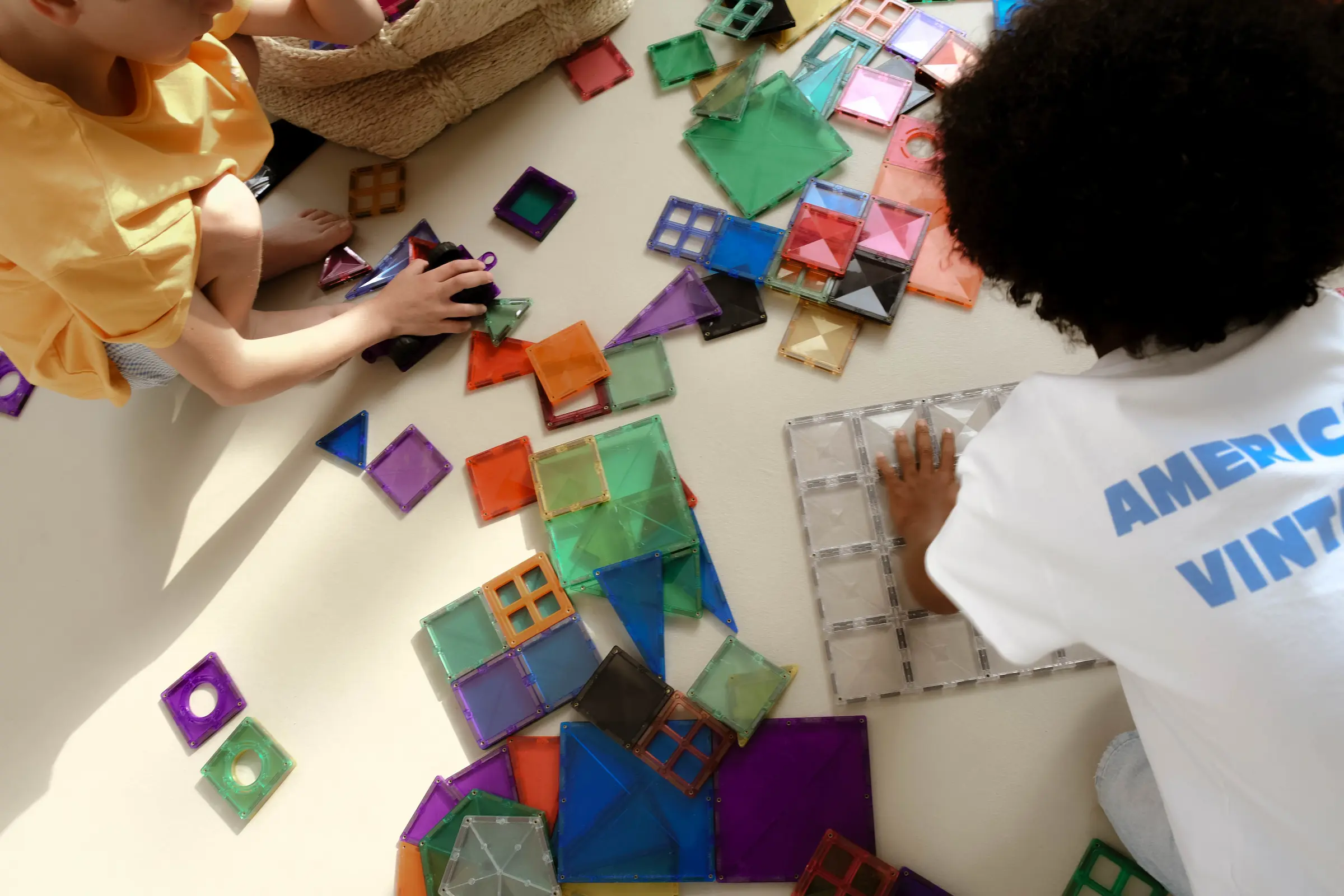
HUNT: Besides recognition, there was another big challenge: explaining what your toys actually are. We suggested clearly spelling out three pillars – ‘sensory’, ‘open-ended’ and ‘educational’ – to claim a unique position in the market. How would you describe them?
Emilie: Sensory toys let children explore through their senses. Educational toys help them build skills through play. And open-ended means there’s no fixed outcome: children are free to let their imagination run wild. It’s all about learning through play, at the child’s own pace. Those really are the building blocks of The Mini Story. We worked out those pillars and themes together during brainstorms, and they felt completely right to me.
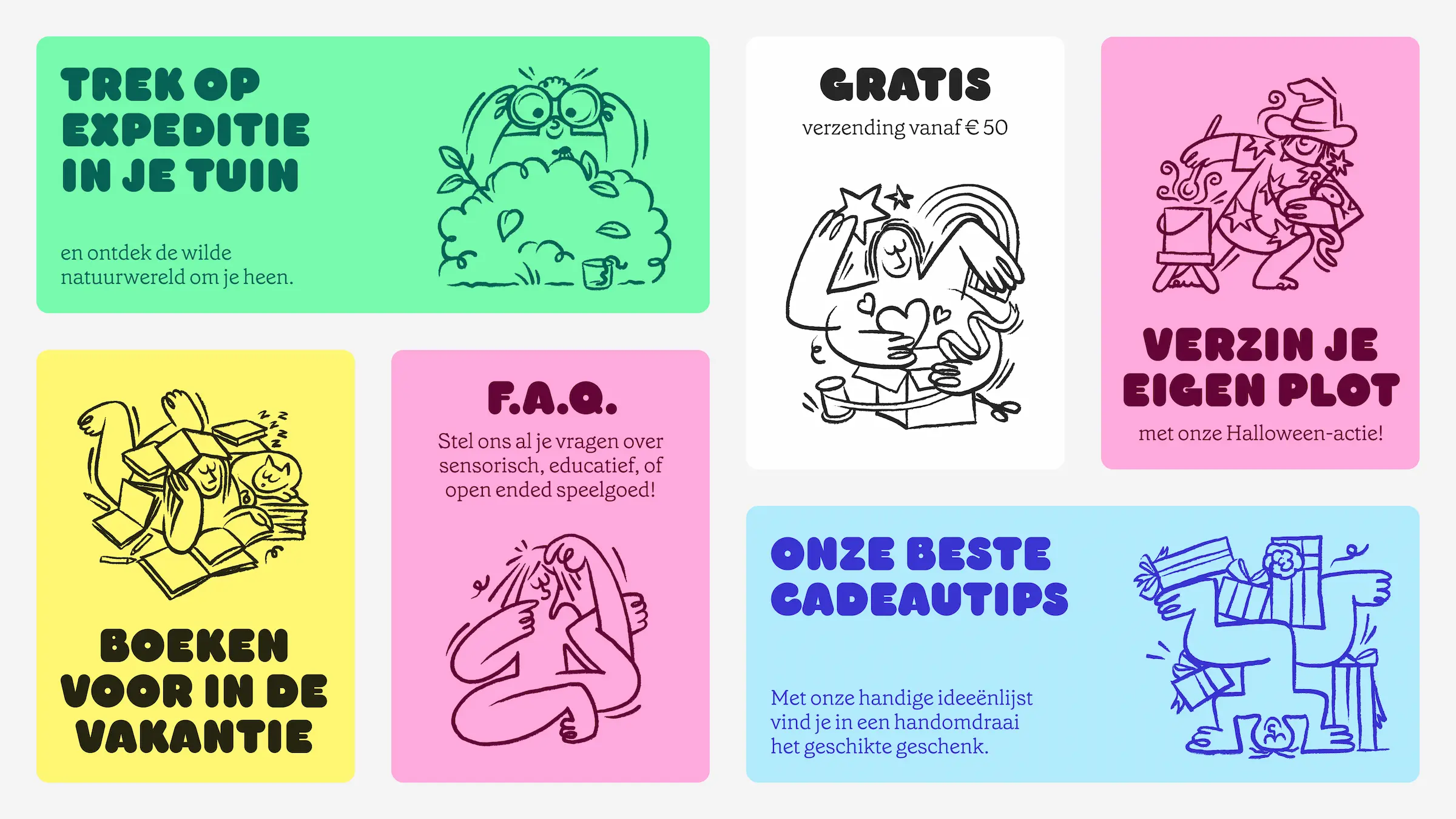
HUNT: From the outset, the illustrations we commissioned from Renée Démart had to show what ‘exploring through the senses’ or ‘play without a fixed outcome’ actually looks like. How was it working with her?
Emilie: Just like Hunt, Renée got it straight away. Alongside the explanations on social media and in our blog posts, the illustrations had to help parents understand the toys – and she absolutely pulled that off.
I think the work strikes a lovely balance. Thomas works with playful, bold shapes, while Renée adds an artistic touch, like the drawing on the parcels customers receive. They complement each other beautifully.
I think the work strikes a lovely balance. Thomas works with playful, bold shapes, while Renée adds an artistic touch, like the drawing on the parcels customers receive. They complement each other beautifully.
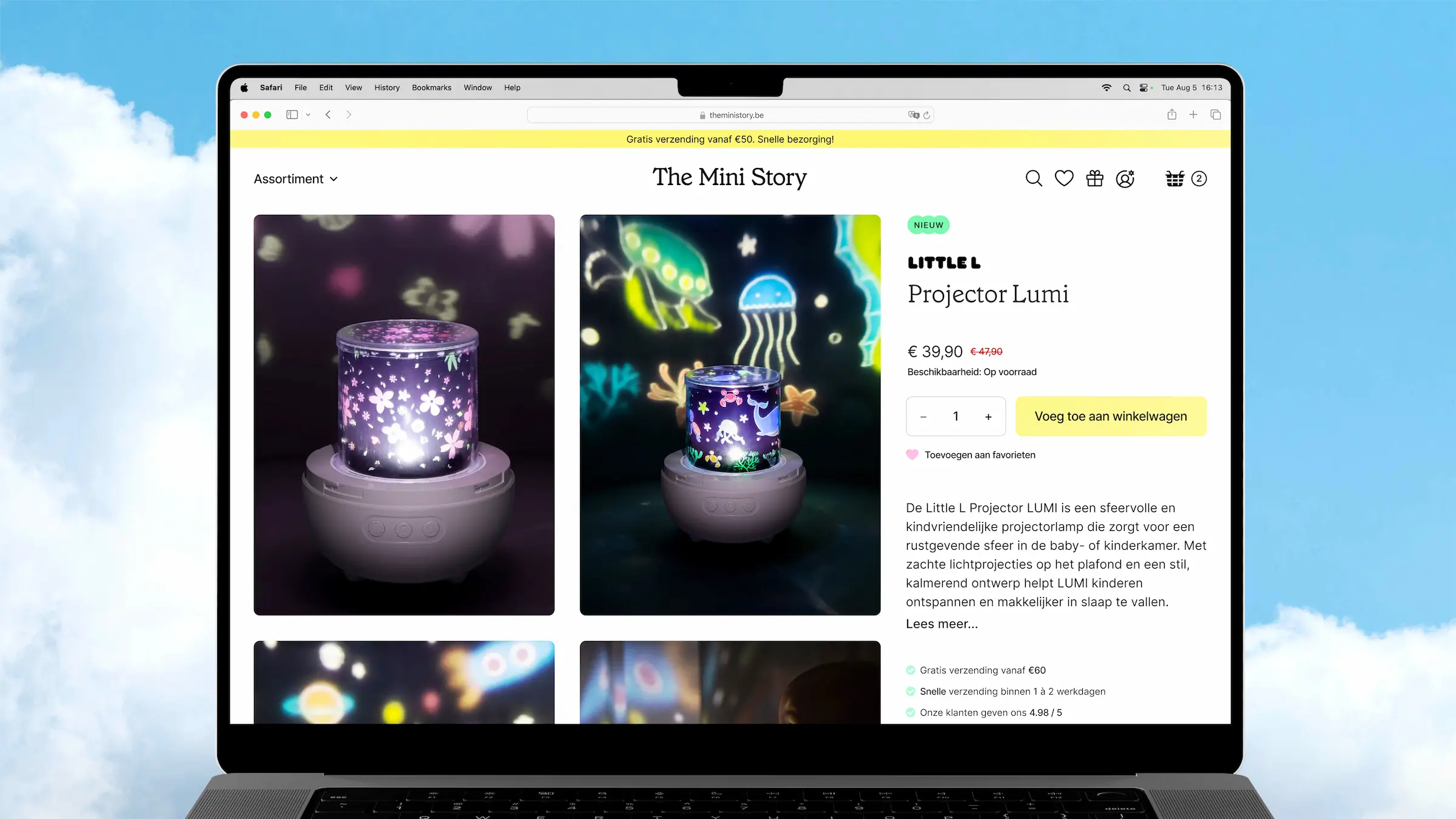
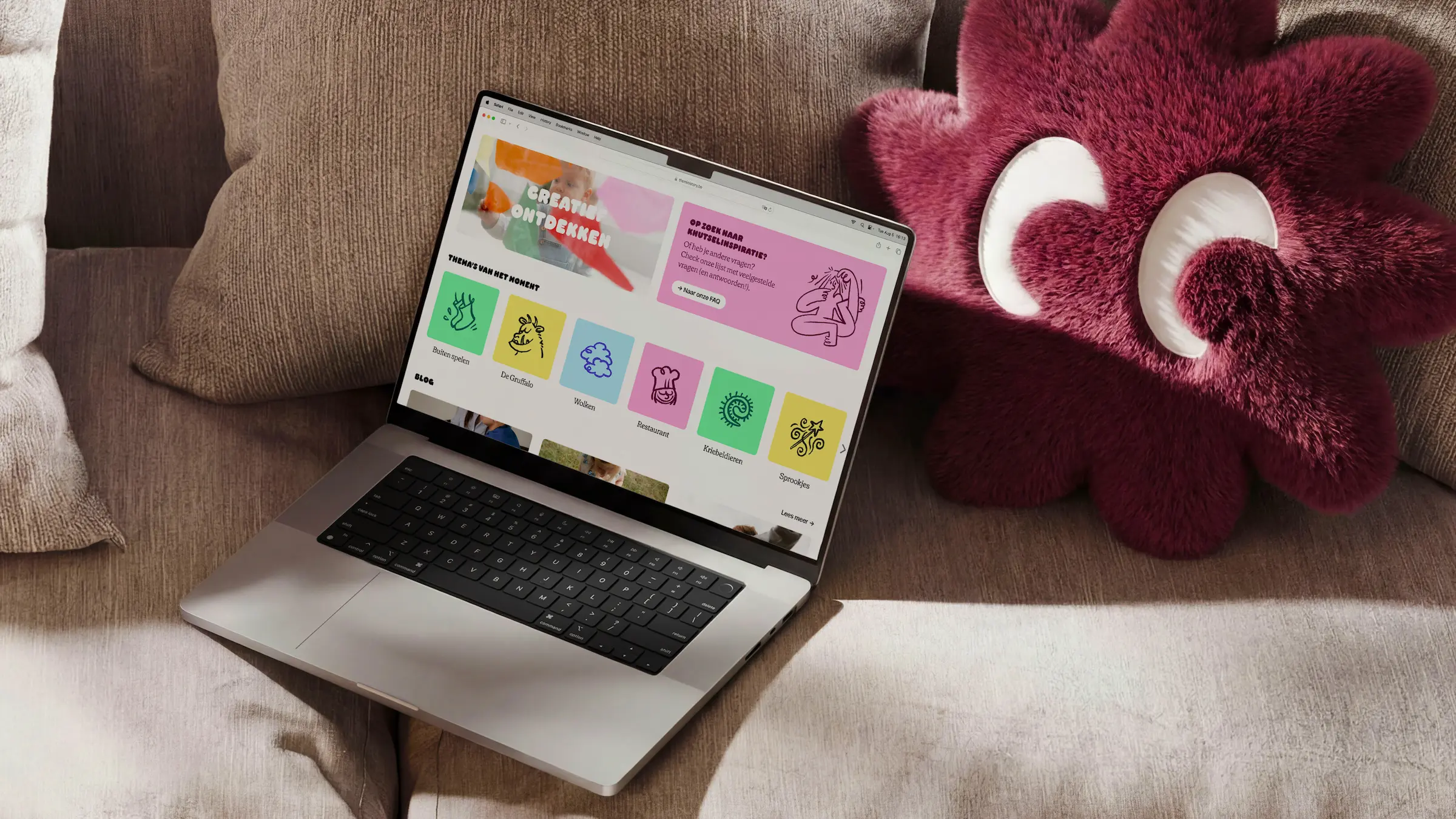
HUNT: Redesigning your existing Shopify store was also part of the overall plan.
Emilie: That’s right – and that was no small job either. You created the design and refined the visual details together with your partner dear digital. They then took care of the development, set up the site and product structure, and built the email flows in Klaviyo, our CRM and marketing platform.
HUNT: You took care of the content: adding and tagging new products, and slotting existing ones into the new structure. How did you combine that with running the business day to day?
Emilie: I’d underestimated how much work goes into relaunching an online shop. We went from a few shelves to a house full of shelves, and then to a warehouse because the house got too small. And all that time, the site had to go live. It was a real scramble to keep up. I’m fairly tech-savvy and I find that kind of thing interesting. The problem was mainly: I can do this – but when? At one point I was packing parcels and working on the site at the same time, with the kids around and a husband who was never home. Juggling all of that was tough.
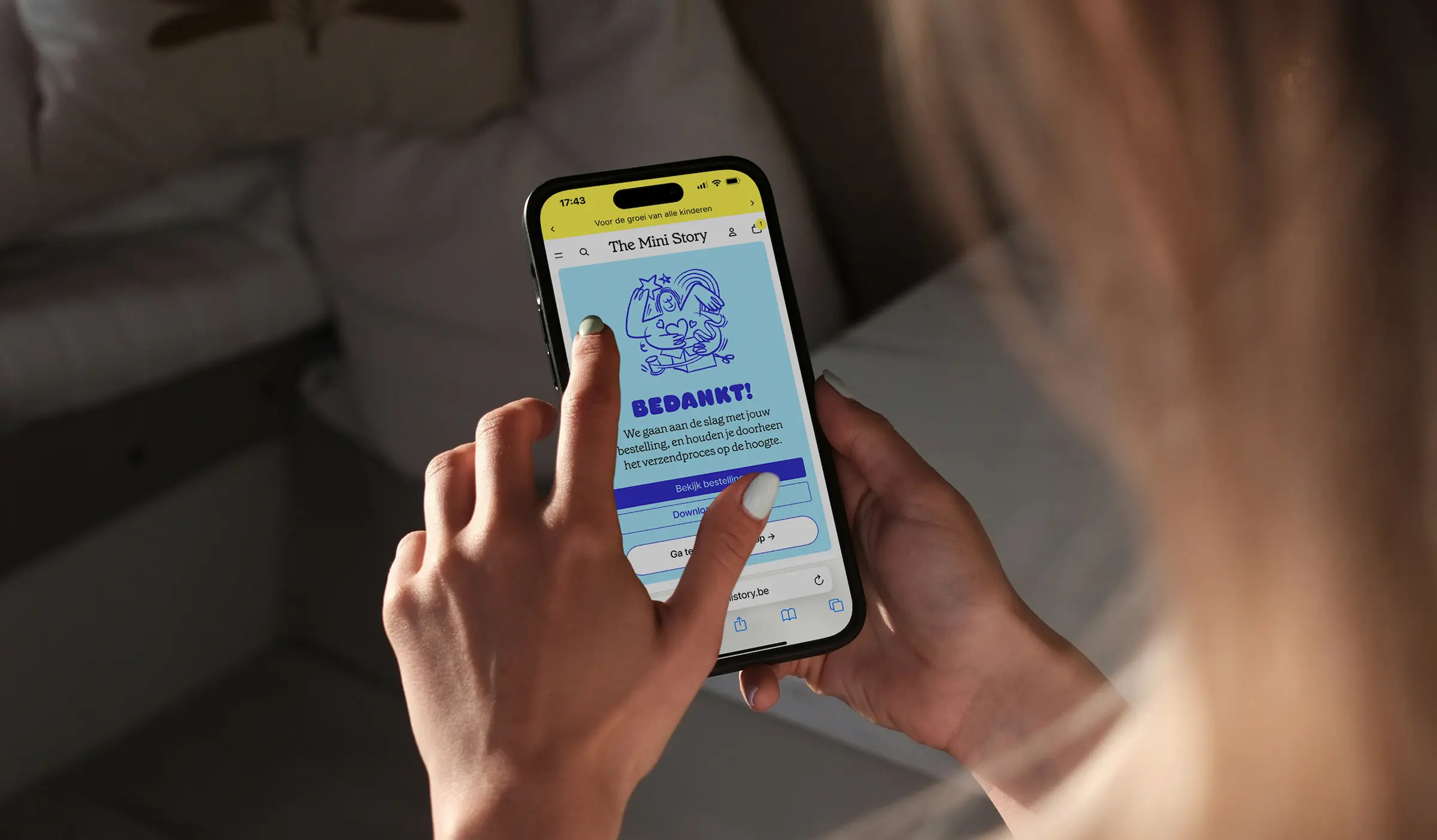
HUNT: What role did we and dear digital play for you during that hectic period?
Emilie: Thomas stayed completely calm – he was my anchor. He understood the thinking behind the brand and made sure it carried through to the site. That really mattered to me: if everyone gets too loose with it, you lose what you’ve built together.
Sam and Loes from dear digital were a great help too. At one point, they were the voice of calm: ‘Let’s launch the site and keep improving it from there.’ I could feel they had my back and wanted us to make it work together. There was a lot of stress and a lot of work, but I always felt supported.
Sam and Loes from dear digital were a great help too. At one point, they were the voice of calm: ‘Let’s launch the site and keep improving it from there.’ I could feel they had my back and wanted us to make it work together. There was a lot of stress and a lot of work, but I always felt supported.
“Hunt understood the thinking behind the brand inside out and made sure it carried through to the Shopify store.”
Emilie Carrette, owner of The Mini Story
HUNT: You wanted to be able to work with the brand yourself. Did that work out?
Emilie: Yes, the handover was really thorough. Templates in InDesign and Illustrator, assets for Instagram stories, posts to introduce myself, Facebook: I could take it from there. I could probably have made some of those things myself, but at the time I simply didn’t have the bandwidth. Hunt delivered the brand in a ready-to-use digital format, so we and our marketing partners could hit the ground running.
HUNT: We’re a team of two. Did that feel like an advantage?
Emilie: I loved it. I worked closely with Thomas, and there was a lot of mutual respect. David did a huge amount behind the scenes, too. I really clicked with both of you.
I know that if I send Hunt a message, I’ll hear back quickly. That doesn’t mean I expect an instant reply every time. But I never once felt like I was on my own.
I know that if I send Hunt a message, I’ll hear back quickly. That doesn’t mean I expect an instant reply every time. But I never once felt like I was on my own.
HUNT: What difference has the rebrand made for The Mini Story?
Emilie: On a personal level, Aster means the most to me. But for The Mini Story as a business, the website is the centrepiece. We need a bit more time before we can put hard numbers on it, but it’s clear that more and more people know who we are. I see it in our Instagram engagement, our follower count and the people who come up to me. We’re continuing to build that awareness with The Dot Society.
There’s still plenty to do. Ideas like ‘sensory’ and ‘open-ended’ aren’t obvious to everyone, and we want to explain them even better – with videos, for example. With my background as a preschool teacher, that’s something I can really throw myself into.
There’s still plenty to do. Ideas like ‘sensory’ and ‘open-ended’ aren’t obvious to everyone, and we want to explain them even better – with videos, for example. With my background as a preschool teacher, that’s something I can really throw myself into.
HUNT: So it’s a brand that leaves you room to keep playing.
Emilie: Definitely. I’ve been working with the designs myself, and I still check in with Thomas and David regularly. When other partners work with the brand, I keep a close eye on what we created together.
Looking back on everything we’ve achieved so far, I realise it has truly become my story. And I’m really proud of that.
Looking back on everything we’ve achieved so far, I realise it has truly become my story. And I’m really proud of that.
Words: Pieter Van Leuven
Photography: Julie Vanderhaeghe
Photography: Julie Vanderhaeghe