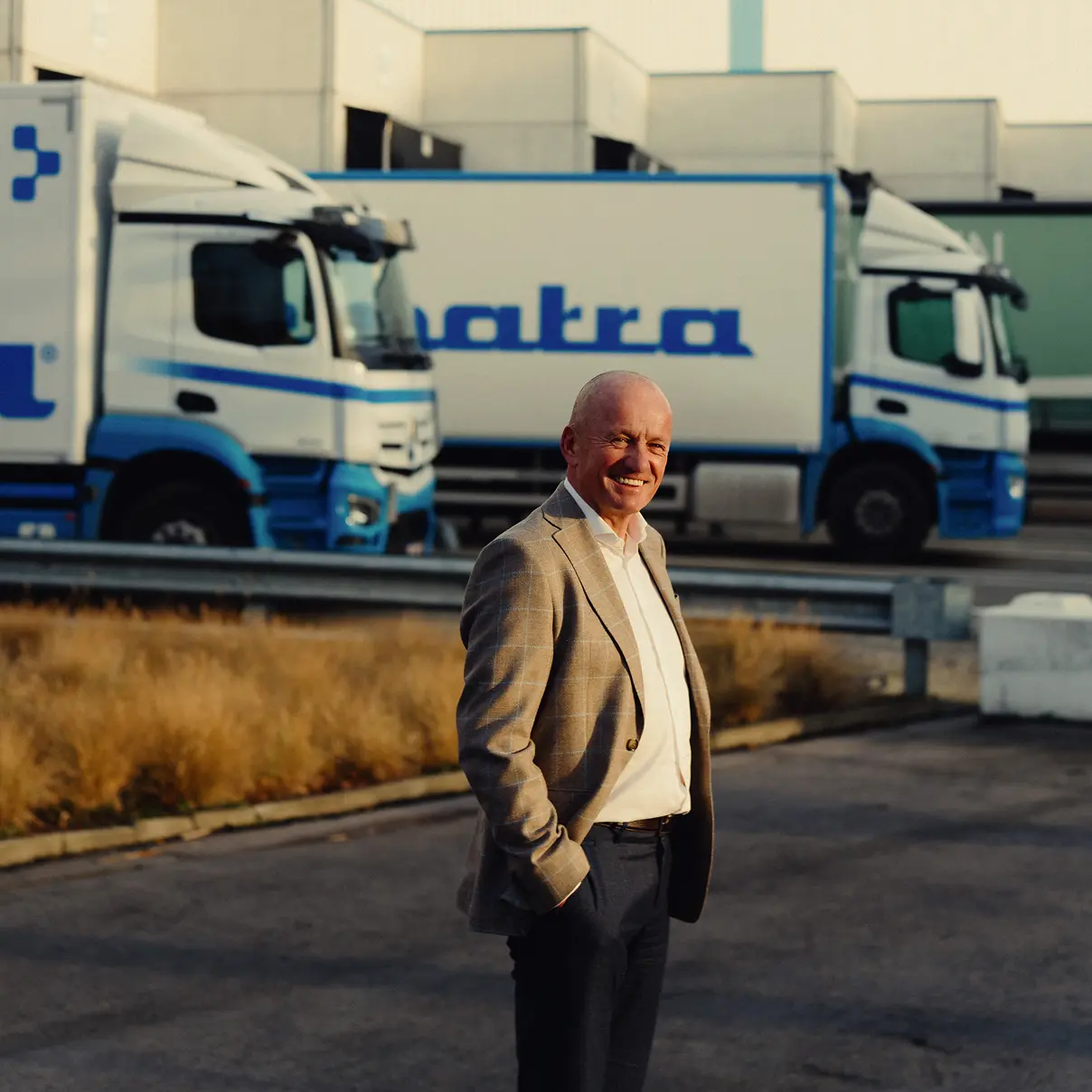
Over fifty years, Dematra has built a logistics group you can spot from a mile away, thanks to its white trucks and bright blue livery. CEO Geert De Jaeger talks about a collaboration that began with “possibly the most boring meeting of his life” and ended in complete trust.
HUNT: Geert, Dematra was founded in 1976. Before we started working together, how much thought did you give to the brand?
Geert: Honestly, not much. The white trucks with that distinctive blue (I know the RAL code by heart: 5015) were already there when my father founded the company. At first, the trucks simply said “DEMATRA” in block letters. Later, three circles were added to symbolize connection: between us and our customers, and the other way around. There was an idea behind it, but no real system.
In the past, if we needed an ad, we'd just send over our logo and that was that. Our website was built by an outside company, and my son would post the occasional news item. We didn't spend much time or money on it. Dematra is a transport company. We don't sell a product like Coca-Cola. Customers choose us because we deliver good service at a fair price, not because of how our trucks look.
In the past, if we needed an ad, we'd just send over our logo and that was that. Our website was built by an outside company, and my son would post the occasional news item. We didn't spend much time or money on it. Dematra is a transport company. We don't sell a product like Coca-Cola. Customers choose us because we deliver good service at a fair price, not because of how our trucks look.
HUNT: So what changed?
Geert: Our acquisitions. Suddenly you have several entities, with trucks carrying different names and logos. That makes you think: how do we bring all of this under one banner? How do we make it clear to customers, and to everyone on the road, that these companies are part of Dematra?
“As we acquired more companies, the question came up naturally: how do we bring all of this under one banner?”
Geert De Jaeger, CEO Dematra
HUNT: The brief didn't leave much room to maneuver: keep the white and blue, and change as little as possible.
Geert: Looking back, that was a very tough brief. The blue and white were ingrained in our customers' minds. When they saw one of those trucks coming, they knew it was Dematra. The colors also had a history going back to my father, so there was probably some unconscious sentiment involved.
Still, keeping the colors was mainly a practical decision. We already had nearly three hundred trucks at the time. You don't repaint a fleet like that overnight. It takes at least five years and costs a fortune. So I said: “Do something with it, but don't touch the white and blue. And preferably don't change too much of the rest either.”
Still, keeping the colors was mainly a practical decision. We already had nearly three hundred trucks at the time. You don't repaint a fleet like that overnight. It takes at least five years and costs a fortune. So I said: “Do something with it, but don't touch the white and blue. And preferably don't change too much of the rest either.”
HUNT: Our first presentation didn't exactly go smoothly.
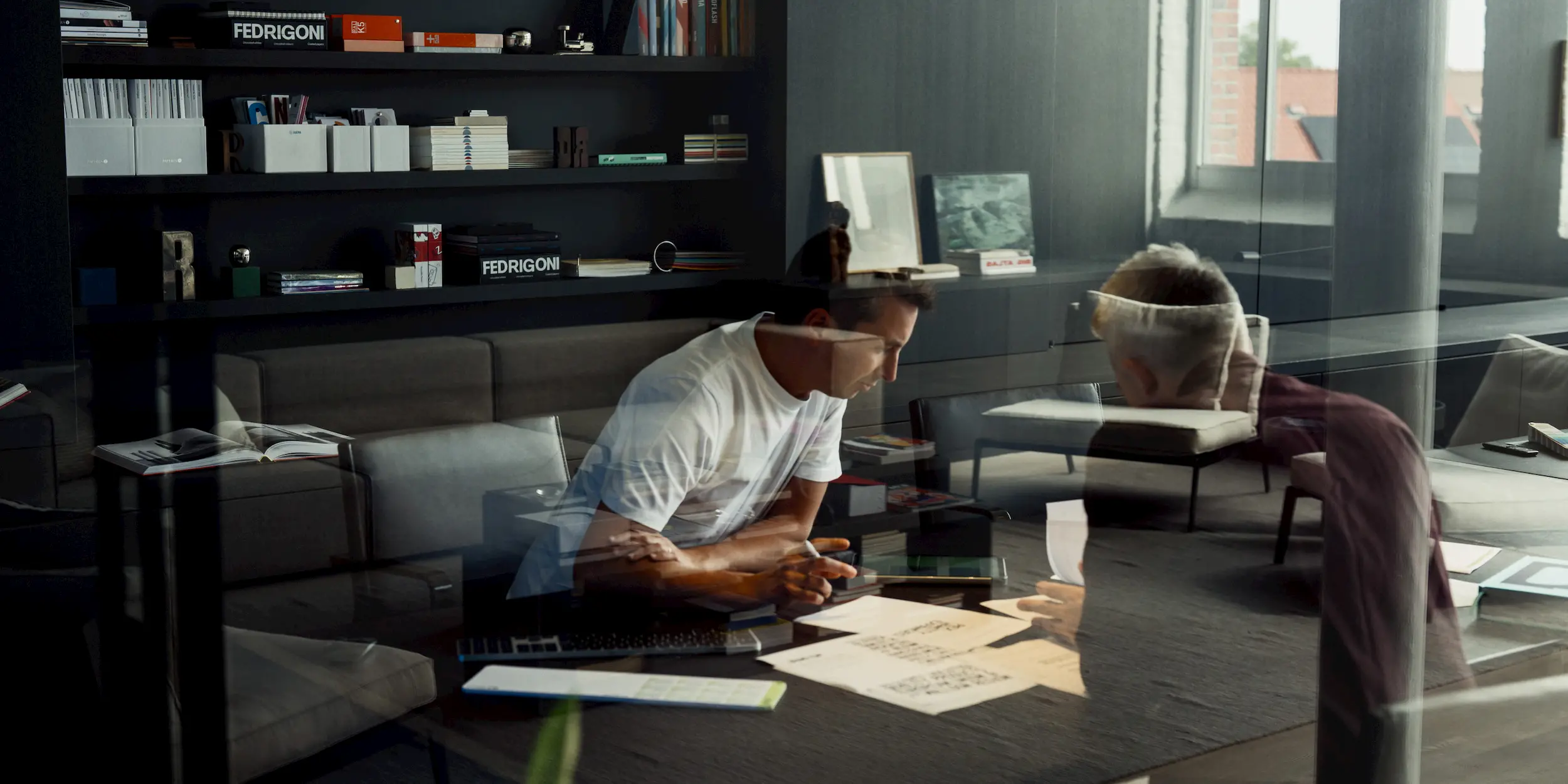
Geert: You came in with a hefty document, full of details about typefaces and technical matters. I told you: “David, Thomas, this is the most boring meeting I've ever sat through.” In hindsight, that was a bit harsh. But all that theory is simply lost on me. I don't need to know how you get there. Just show me something visible and tangible as quickly as possible. Then I know whether we're on the right track, and we can adjust.

HUNT: And were we on the right track?
Geert: Absolutely. I was genuinely amazed by the result. You were hardly allowed to change anything, so to speak, and yet you came back with something that made me think straight away: “Wow, this is it.”
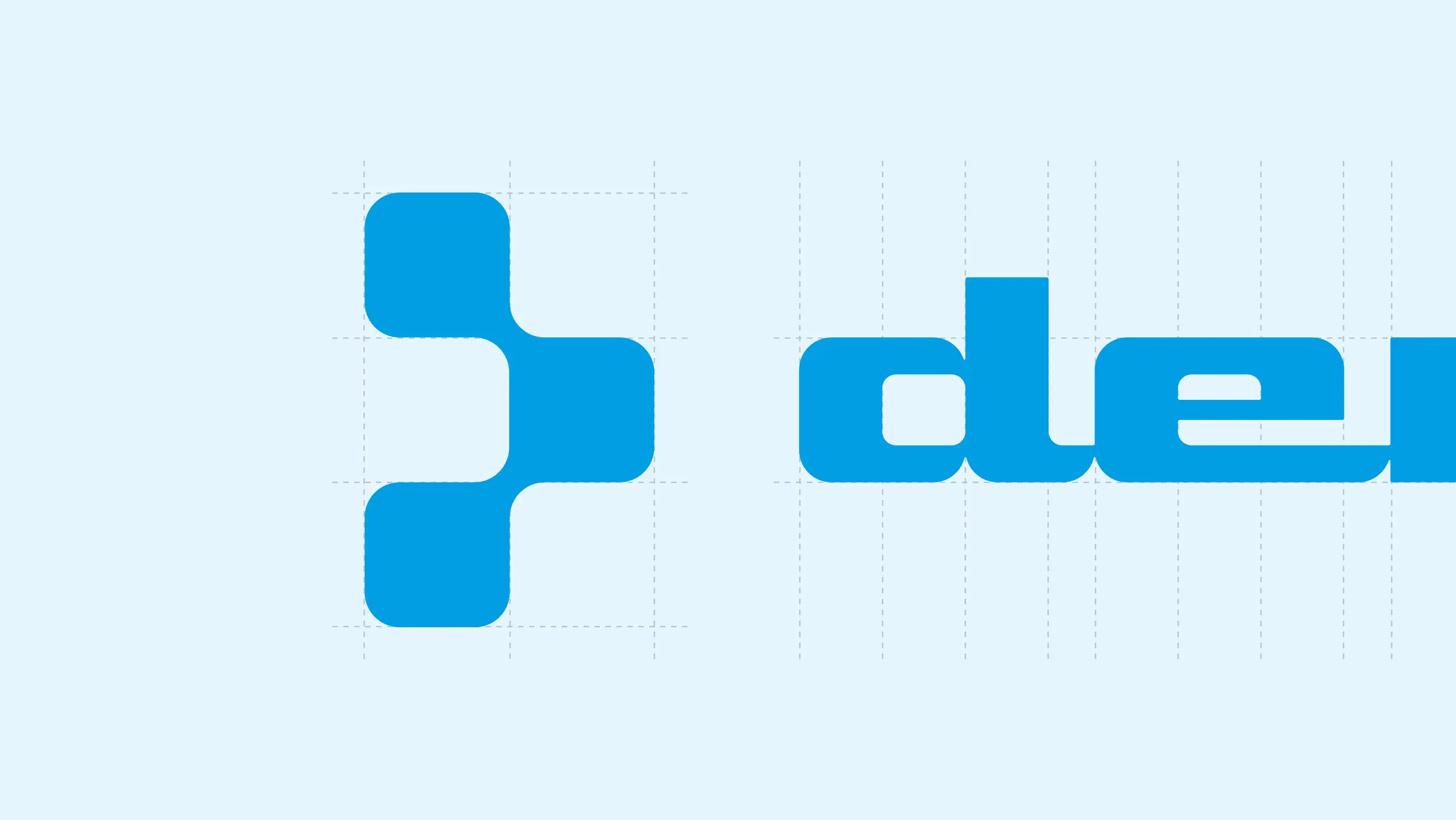
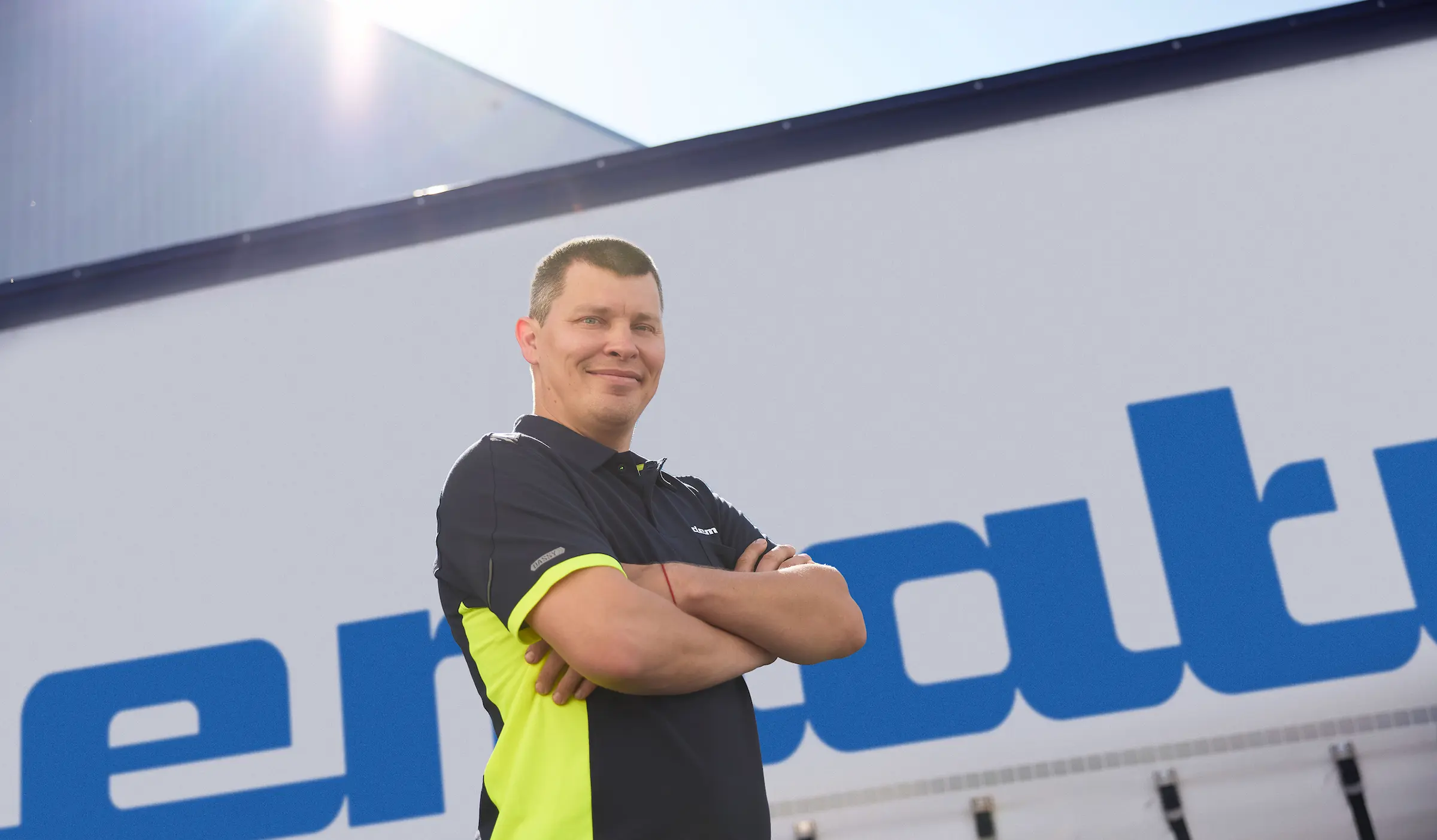
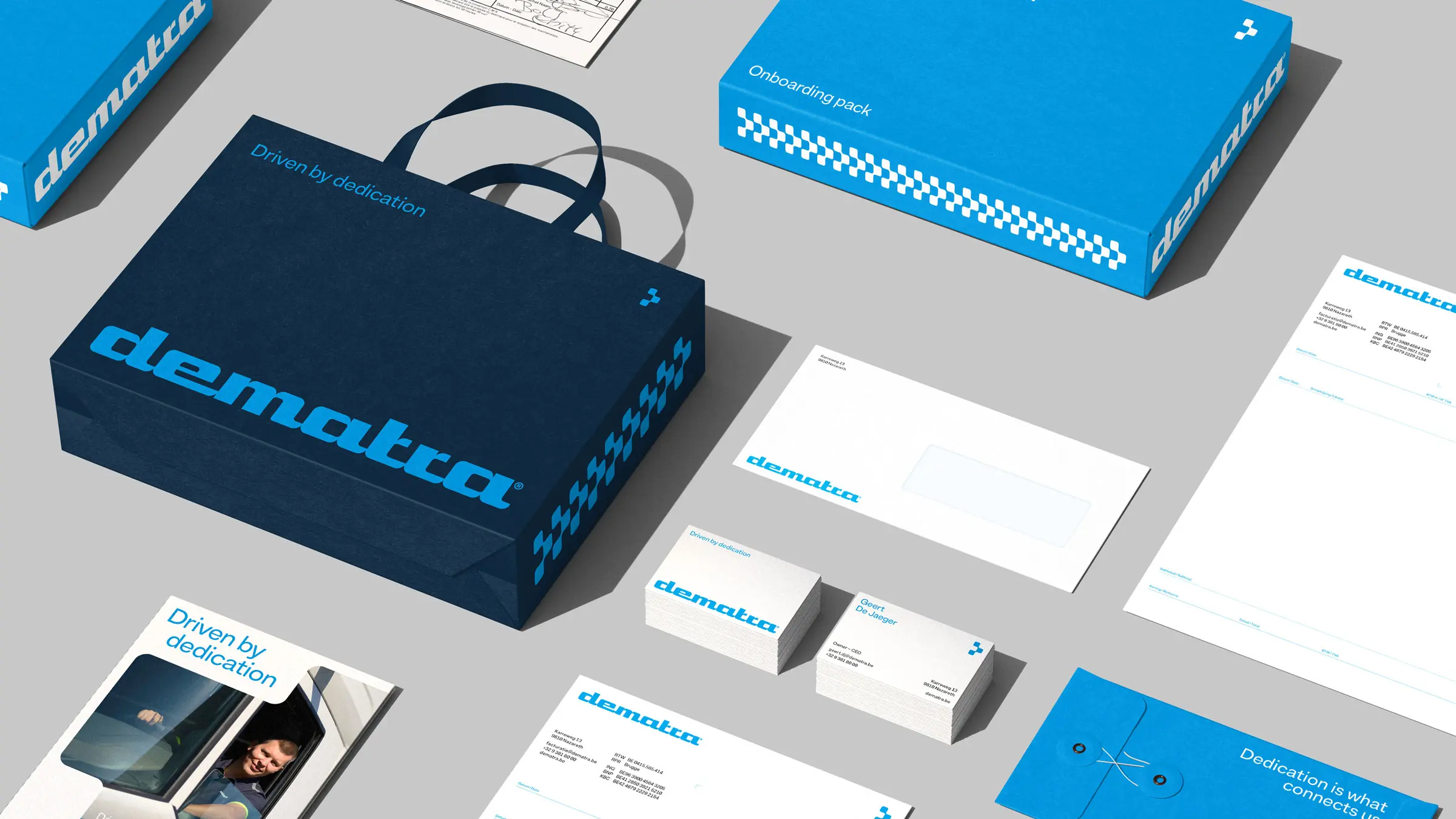
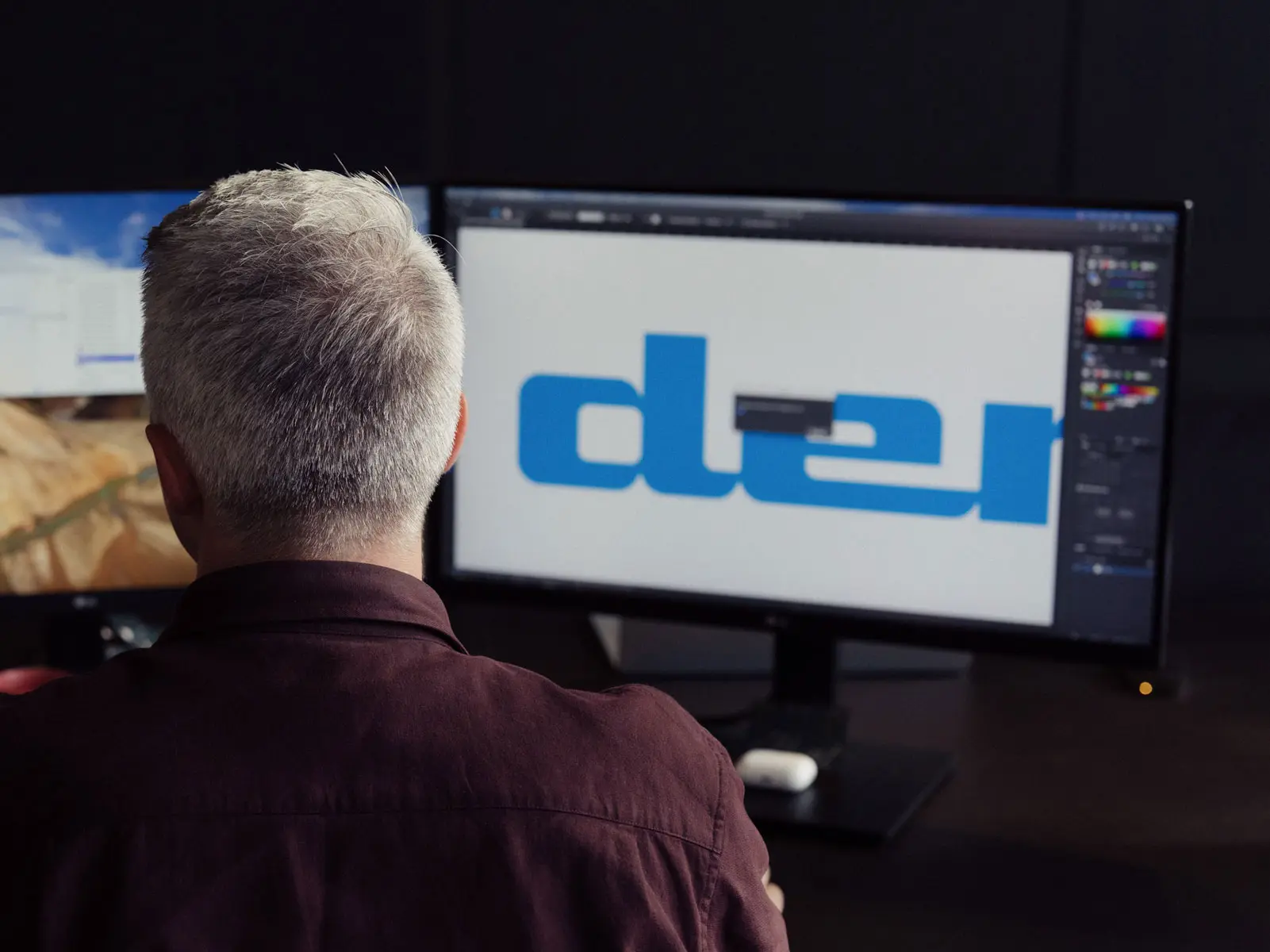
The new logo is simple, but very strong. It jumps out immediately on our trucks. The typeface is a big improvement too. And then there are details we'd never have thought of ourselves. For example, the name is no longer in the middle of the truck but a bit lower, which makes it much easier to see from a car.
The new logo is simple, but very strong. It jumps out immediately on our trucks. The typeface is a big improvement too. And then there are details we'd never have thought of ourselves. For example, the name is no longer in the middle of the truck but a bit lower, which makes it much easier to see from a car.
“What made the difference was that David and Thomas understood what we were asking for, even though we couldn't put it in their professional terms.”
Geert De Jaeger, CEO Dematra
It still looked like Dematra, yet at the same time it was completely different. You could tell a lot of thought had gone into it. What made the difference was that you understood what we were asking for, even though we couldn't really put it in your professional terms.
HUNT: That trust opened the door to more than just the logo.
Geert: Yes. Once I see that someone understands where I want to go and quickly comes back with the right result, I don't need to second-guess every next step. David gets what I mean and turns it into something that works. Most of the time, he's spot on. That's how the website and other projects ended up with Hunt as well.
“David turns what I mean into something that works, and most of the time he's spot on.”
Geert De Jaeger, CEO Dematra
HUNT: Sometimes things had to move fast, like when your new high-bay warehouse opened.
Geert: Lots of customers, employees and neighbors wanted to see inside that building. They had literally watched it rise from the ground and were curious about what happened behind those walls. We organized an open house on a Sunday morning and announced it with a full-page ad in the Sunday paper.
“When you see something could be better, you come forward with a proposal yourselves. That's typical of Hunt.”
Geert De Jaeger, CEO Dematra
For the design, I had the idea of a giant tearing open the side of the building to reveal what was inside. Another agency had worked it out, but it was nowhere near good enough. Hunt saw that design and very quickly came up with an alternative, without much fuss. I looked at it and thought once again: “This is it.” In the end, around 1,800 people came. That project sums up Hunt. When you see something could be better, you take the initiative and come forward with a proposal.
HUNT: In 2026, Dematra turned fifty. Did you know right away that you wanted to celebrate in a big way?
Geert: Not at all. We're constantly focused on our work and don't dwell much on things like that. But of course, you only turn fifty once. I sat down with my son Cédric, my daughter Bénédicte and our CFO Julie, and we decided: if we're going to do something, we need to do it properly. A big party, with all the bells and whistles. People had to go home feeling they'd experienced something out of the ordinary.
HUNT: And so a birthday grew into a full anniversary story, with an event and the magazine Fast Forward.
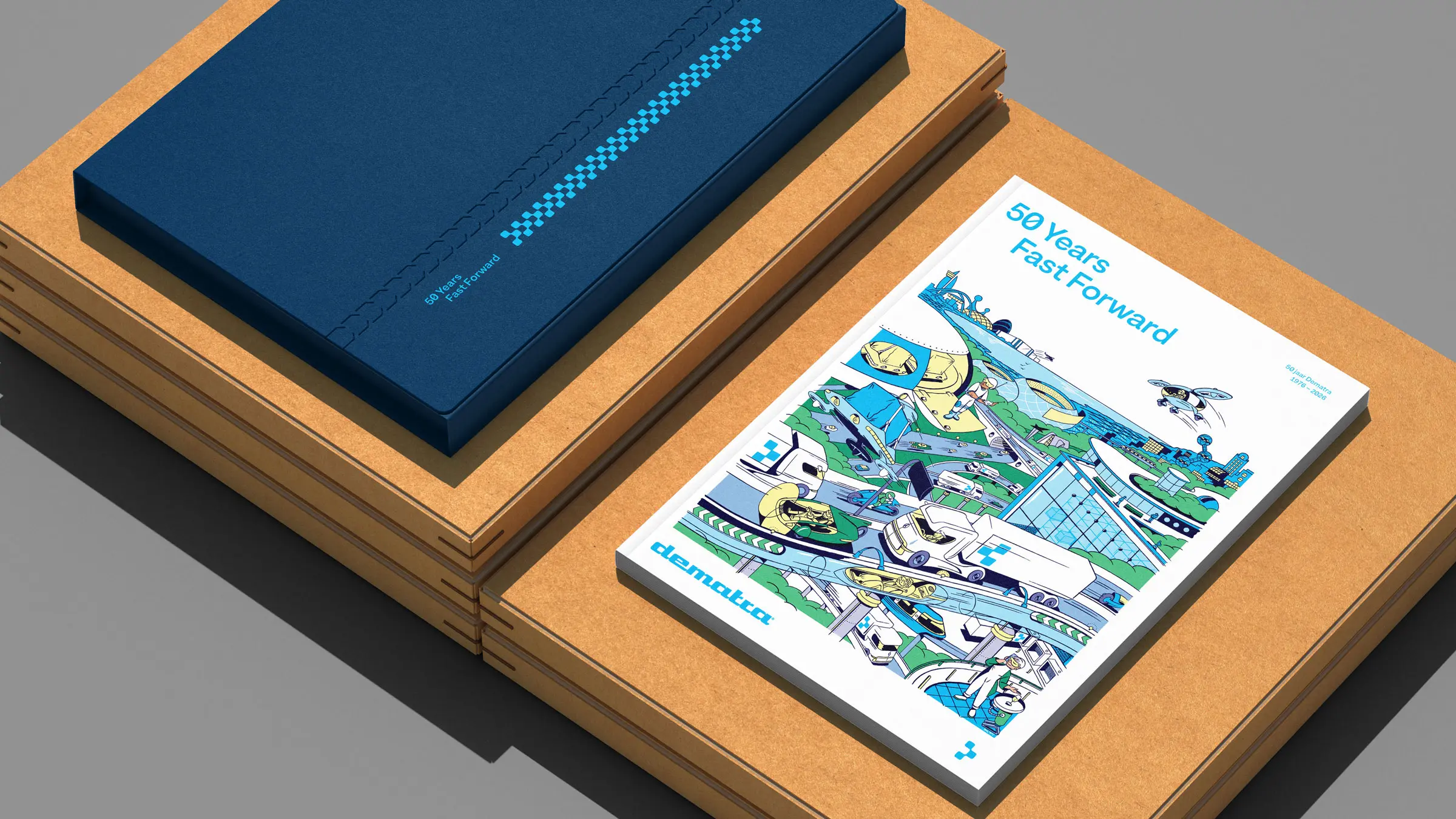
Geert: The idea of a magazine came up. I liked it, but only on the condition that it looked ahead. Not just filling pages with history and photos of employees, but asking people from inside and outside our industry how they see the future of logistics, transport, technology and entrepreneurship. That's how Fast Forward came about. Hunt came up with the concept and then designed the whole thing.
HUNT: It was a big undertaking, and Hunt brought in other partners for it. Were you confident it would work?
Geert: Of course, but I also knew it wouldn't be easy. You're approaching people who aren't all easy to interview. You have to bring together photographers, writers, designers and a printer. Hunt is only two people, but I never doubted it would come together, or that the partners you brought on board were up to the job.
“Our anniversary magazine isn't something that ends up in the trash. It's an eye-catcher we take along when we visit clients.”
Geert De Jaeger, CEO Dematra
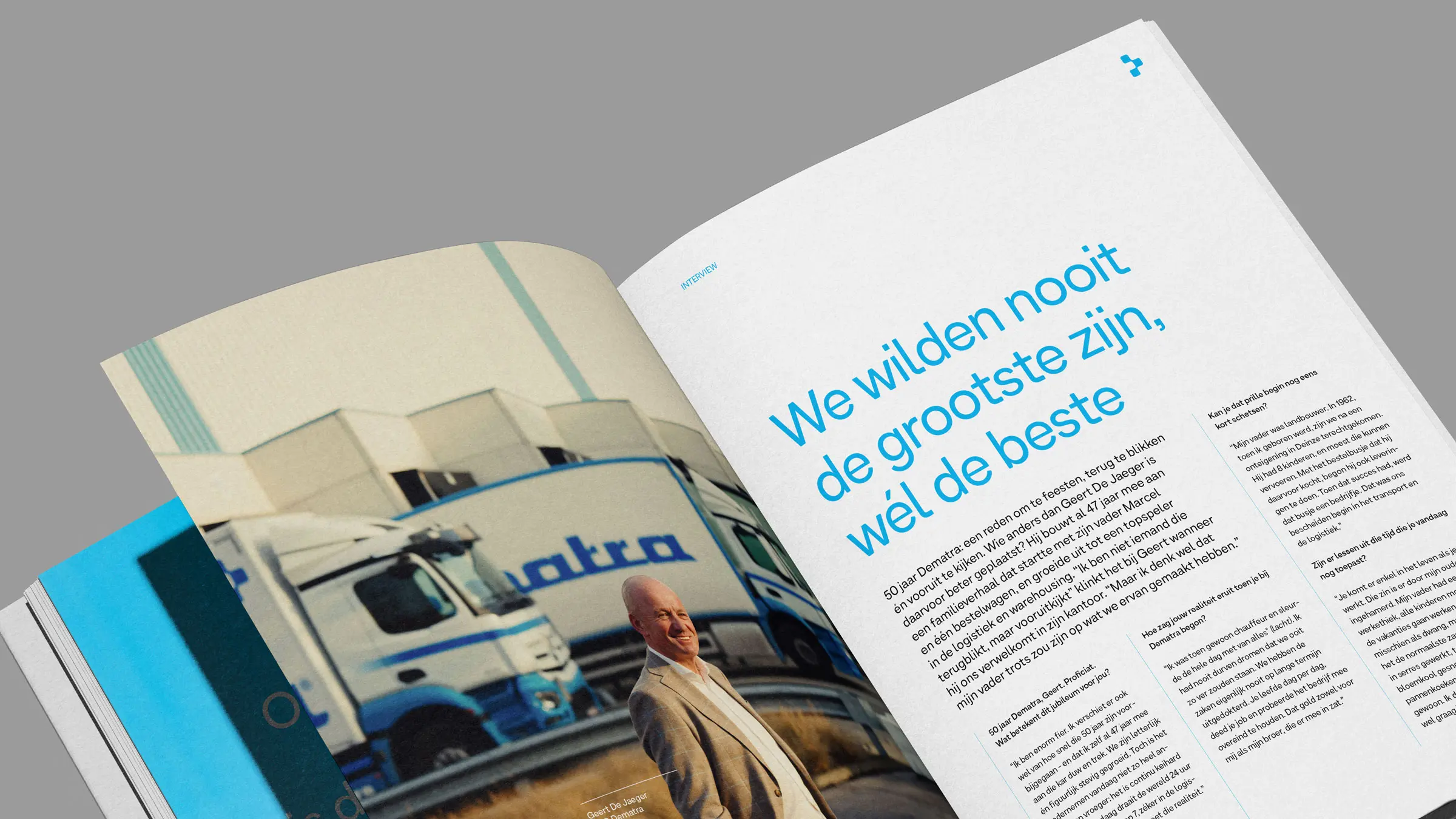
It turned out really well, both visually and in terms of content. Every interview has soul. It goes beyond our day-to-day work. We're proud of it and we show it off. I still take the magazine with me when I visit a company. It's an eye-catcher, not something people throw away after reading.
HUNT: At first, we didn't agree on the cover.
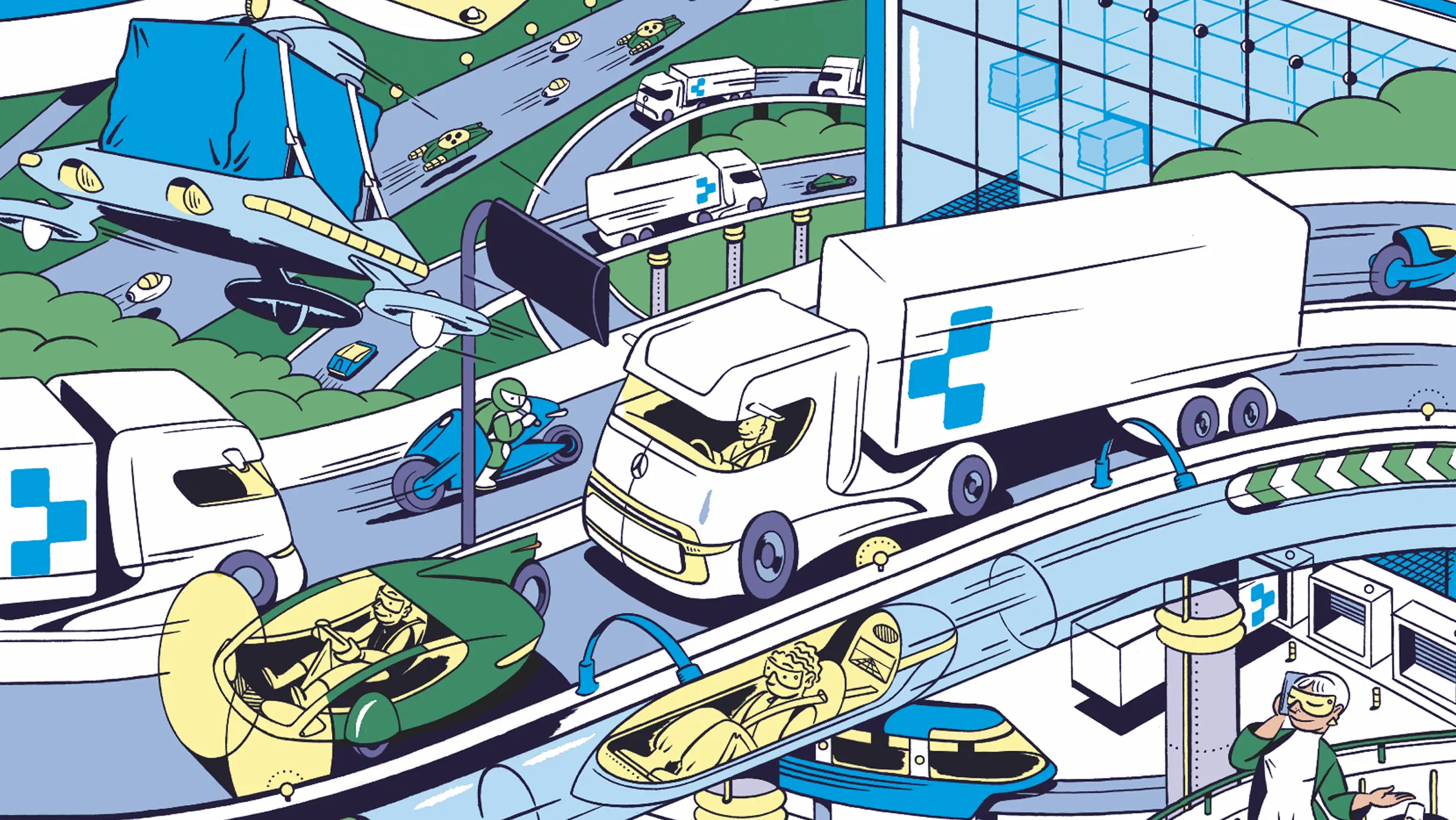
Geert: You wanted to work with an illustrator. My first reaction was: we're not going to turn this into a children's comic, are we? I found it hard to see how drawings would suit us, or a magazine about the future. But you stood your ground, and I'm glad you did. The illustration (by Xavier Truant) captured our future in a playful, appealing way.
“Trust doesn't mean you automatically agree on everything.”
Geert De Jaeger, CEO Dematra
On the other hand, I was the one who insisted on a particular type of paper and finish. We debated it and worked together to find the right solution. I think that's healthy. Trust doesn't mean you automatically agree on everything.
HUNT: How important is a direct line to you?
Geert: Very important. Whether Hunt has two people or thirty-six doesn't matter much to me. But I want a single point of contact. I call David, he understands me without much explanation, and the result follows quickly.
Even when deadlines were close and things had to change at the last minute, I could count on Hunt. I've never heard David say, “That's no longer possible.” In our industry, we work under time pressure every single day. I expect a partner to handle it the same way.
Even when deadlines were close and things had to change at the last minute, I could count on Hunt. I've never heard David say, “That's no longer possible.” In our industry, we work under time pressure every single day. I expect a partner to handle it the same way.
HUNT: Which part of the collaboration or rebrand has had the biggest impact in the end?
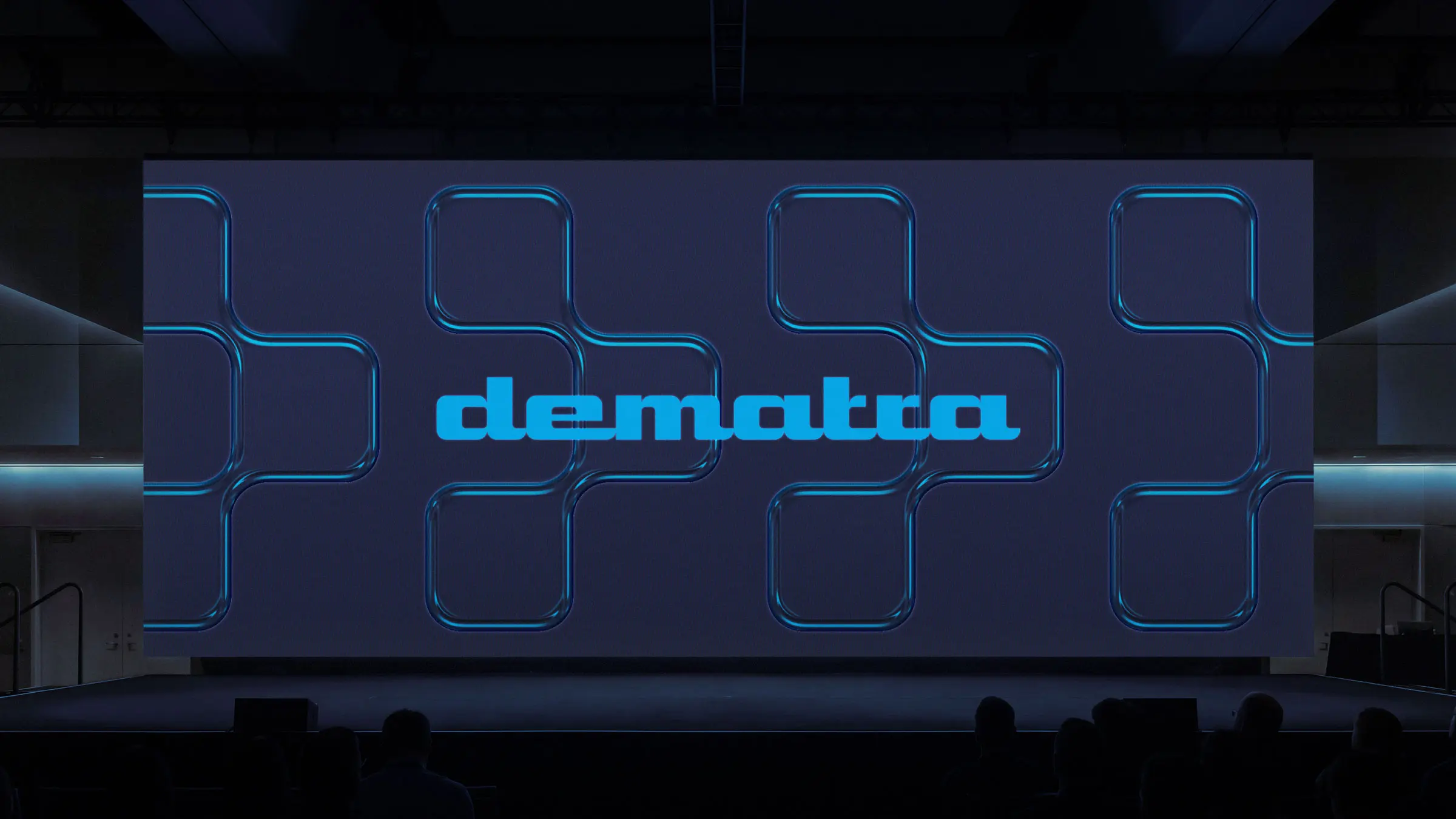
Geert: I'm still a huge fan of our new logo. It's recognizable and you can do an incredible amount with it. Large on the back of a truck, small and repeated across the front of a cab, on a running shirt, or like Formula 1 tire tracks on my race car: it always works. That's what makes it so strong.
But perhaps the most important thing is the trust that grew out of that first result. David and Thomas are fantastic creatives. What they deliver with two people and a good network stands up to anything a big agency can do. For future projects, Hunt is the only candidate.
But perhaps the most important thing is the trust that grew out of that first result. David and Thomas are fantastic creatives. What they deliver with two people and a good network stands up to anything a big agency can do. For future projects, Hunt is the only candidate.
HUNT: From “the most boring meeting ever” to trusted partner?
Geert: That pretty much sums it up. Maybe I was tough at the start, but Hunt did exactly what I asked: explain less and show more. And what they showed was spot on.
Text: Pieter Van Leuven